Jun 29

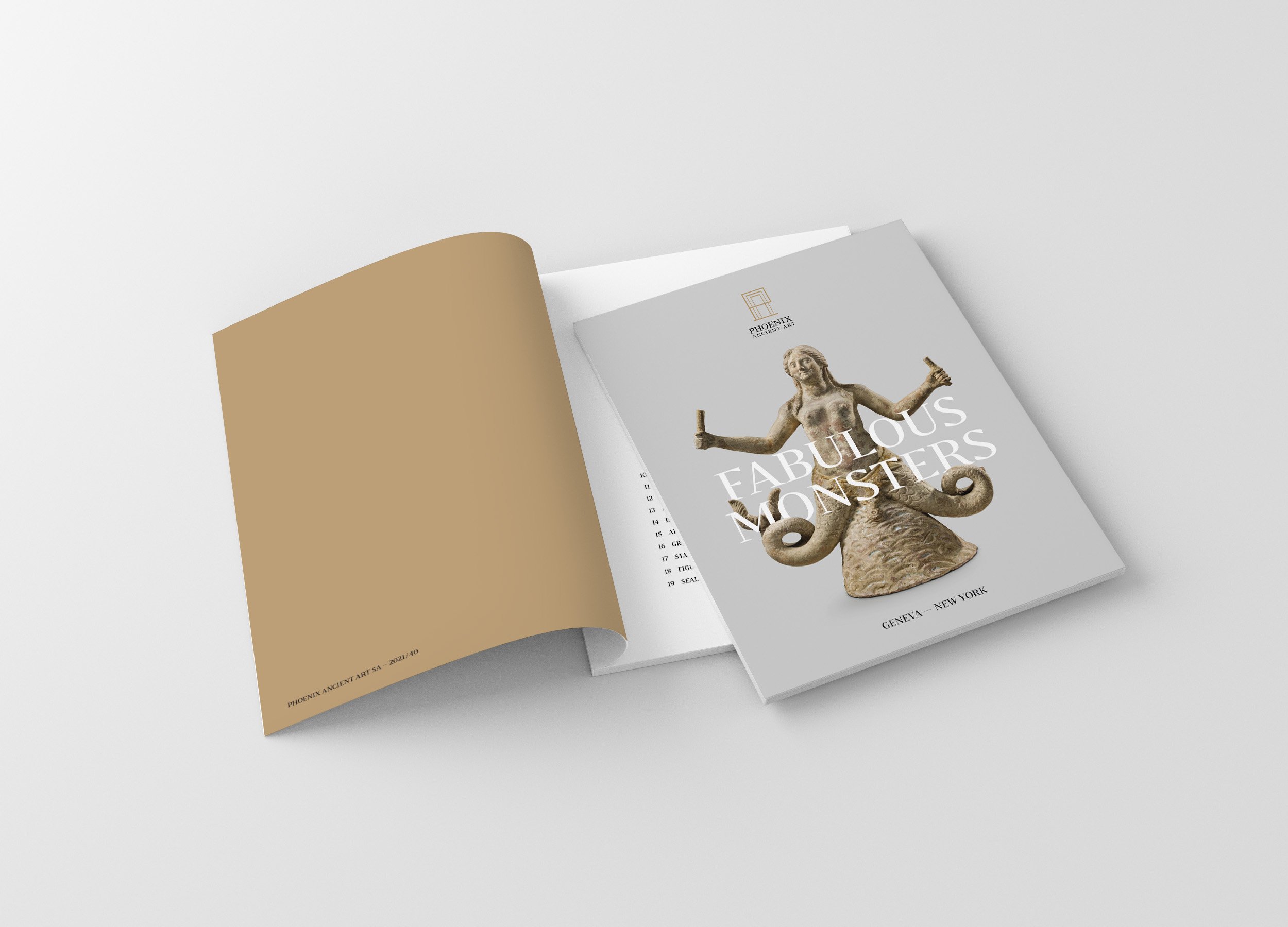
Ali and Hicham Aboutaam arranged an exhibition of “Exotics of the Ancient World.” The following is taken from the introduction to the catalogue which was published for this exhibit.

In the 19th century the neo-classical movement together with the renewed taste for antiquities reinforced the image of ancient idealism. Beauty was filled with elegance and nobility.

Because of this focus on the idealization of beauty, an entire aspect of antiquity was forgotten. The dimension of the ancient world which was marginalized and considered negligible included representations of the strange, unusual and picturesque. These works of art were viewed as trivial and even repulsive.

This collection hopes to suggest a bit of a change of scenery. We believe there is a parallel counterpart in the literature of the times. We at Phoenix Ancient Art believe it is a response to a type of weariness or boredom, perhaps caused by an excess of dignity and grandeur.

Jun 22

Ali and Hicham Aboutaam of Phoenix Ancient Art presented a beautiful catalog displaying unusual antiquities from a class with neglected, forgotten themes.

The following is the introduction to the catalog.

The works of Greco-Roman antiquity are familiar to our vision of the world. We are well acquainted with the themes of reason, moderation and truth, these values being the cornerstones of western civilization as we know it. In addition, the essence of the art is naturalistic: based on objective observations of the reality surrounding us. However the art, as art, goes a step further, responding to the reality with a desire to surpass reality, making it truer, more beautiful, and more perfect than the reality observed. There is systematic idealization, often depicted in the artistic representation of the human form, which is seen as the highest standard of beauty. This is why it is fundamental to the Greek notion of beauty that the gods are represented through the human form, distinguished only through an exceptional sense of majesty.

Jun 14

Ali Aboutaam, along with his brother Hicham, love what they do. They are passionately committed to bringing beautiful art objects of past ages to as many people as possible. Among Phoenix Ancient Art’s clients are some of the world’s greatest museums. When ancient art is on display in a museum setting the wealth of the world’s cultures is shared as widely as possible.

Of course private individuals and collectors purchase antiquities with the desire to enrich their environment, with the beauty and meaning that come from such objects. But along with the privilege of owning and enjoying rare artifacts of extraordinary beauty comes the responsibility of actually acting as a custodian for each work of art. Ultimately these objects that have come down to us through hundreds and in some cases thousands of years cannot really belong to any one individual. These ancient works of art belong to our communal culture and heritage. Each individual owner is really escorting the object through time so that it continues to “live” in a certain sense, into the future generations.

Ali Aboutaam says it best: “Our clients never really own any of these works, but merely look after them in their best possible interest (restoration, conservation, studying, publishing, exhibiting, etc…), for only a brief time span, until parting, and then someone else, be it an individual or an institution, takes over that responsibility.”

The Aboutaams and Phoenix Ancient Art believe in what they do, and it is their wish and goal that as many people as possible can enjoy the privilege of owning objects of beauty and historical significance.

Jun 7

Phoenix Ancient Art is run by two brothers who grew up surrounded by antiquities and beautiful objects of art.

Ali Aboutaam was born in Lebanon, a country rich in archeological wonders. In Lebanon one can find the remnants of great civilizations such as the Phoenician and Roman cultures. In the midst of this heritage Aboutaam was raised by parents who were themselves involved in buying and selling antiquities.

While still in college studying engineering Ali was able to satisfy is passion for collecting antiquities by building his own respectable collection of coins from the Hellenistic period.

Upon graduating Ali began to take his position as his father’s heir to the family business. Over the years Ali Aboutaam, along with his brother Hicham, have built up Phoenix Ancient Art until it became one of the world’s most renowned antiquities dealerships, with offices in Geneva and New York.

Today Ali resides in Geneva, Switzerland, but travels worldwide in search of objects to offer to his clientele and display in his gallery. Aboutaam is lucky to be able to visit the great museums of the world while on his travels, further expanding his understanding and appreciation of the world’s art, from the ancient past and the far ends of the globe.

May 28

Launched on May 1st, 2009, the on-line antiquities auction, gallery, and dealer of ancient art, dubbed e-tiquities, brings the world of antiquities to a broader range of potential collectors than was previously possible. The brainchild of brothers Hicham and Ali Aboutaam, e-tiquities is the virtual adjunct to the Phoenix Ancient Art real-world galleries located in New York City and Geneva, Switzerland.

Purchase prices range from only $500, allowing just about anyone with an interest and a computer with internet to enter the (previously) rarefied world of antiquities collecting. Most objects on display are from the area of the Mediterranean basin and span over 7,000 years of the human pursuit of beauty and refinement. The oldest artifacts come from the Neolithic period in world history, about 6,000 B.C.E., until the middle ages, approximately the 14th century A.D.

Hicham Aboutaam, co-owner of Phoenix Ancient Art explains the importance of e-tiquities for veteran collectors as well as novices.

“In launching e-tiquities by Phoenix Ancient Art, we hope both to introduce a new audience to the cultures of the ancient world, and to give our existing clients an easy way to expand their collections. One of the things which makes Phoenix Ancient Art special in our field is the guarantee of authenticity that we provide to our clients, whether they buy works in our galleries or on our new website. Over the years, we’ve developed procedures to establish provenance (chain of ownership) to ensure that our pieces are both authentic and on the market in accordance with international law.”

May 21

Phoenix Ancient Art is an extremely reputable and successful dealer in antiquities, which can be attributed to several unprecedented developments in the revamping of their business model.

Perhaps the most crucial change has been their guarantee: They will grant a full refund on any purchase price, even if you bought a one million dollar artifact, whose provenance turns out to be untrue.

Peter Chavkin of the law firm Mintz Levin, has worked with the Aboutaams in the antiquities market. He explains, “You want a dealer who’ll stand behind the pieces and anticipate potential issues and the Aboutaams have the wonderful approach of not sticking collectors with a piece that turns out to have problems.”

Due to this and other changes Phoenix is doing better than ever before. Those “in-the-know” say that Phoenix has traditionally done more antiquities business than Sotheby’s and Christie’s combined.

Notwithstanding the record sales of the bronze Artemis and Guennol lioness in 2007, Phoenix also had a great year, selling 12 pieces for more than $1 million each in 2006, compared with only 2 pieces selling at that price in 2005, and Sotheby’s selling none for over $1 million in 2006.

May 14

Ali Aboutaam explains the philosophy of the aggressive acquisition of antiquities practiced at Phoenix Ancient Art.

“We are buying so much all the time, but it is because these things will not come back. Most people don’t understand, but when you feel that you are not going to see something like this again, you try as much as you can to get it. Sometimes more than you can.”

This philosophy was passed down from Ali and Hicham Aboutaam’s father, the founder of the family business. At the time the brothers took over, the world of antiquities was undergoing enormous upheavals, and what was once a “by appointment only”gallery is now open to the public, in both New York and Geneva.
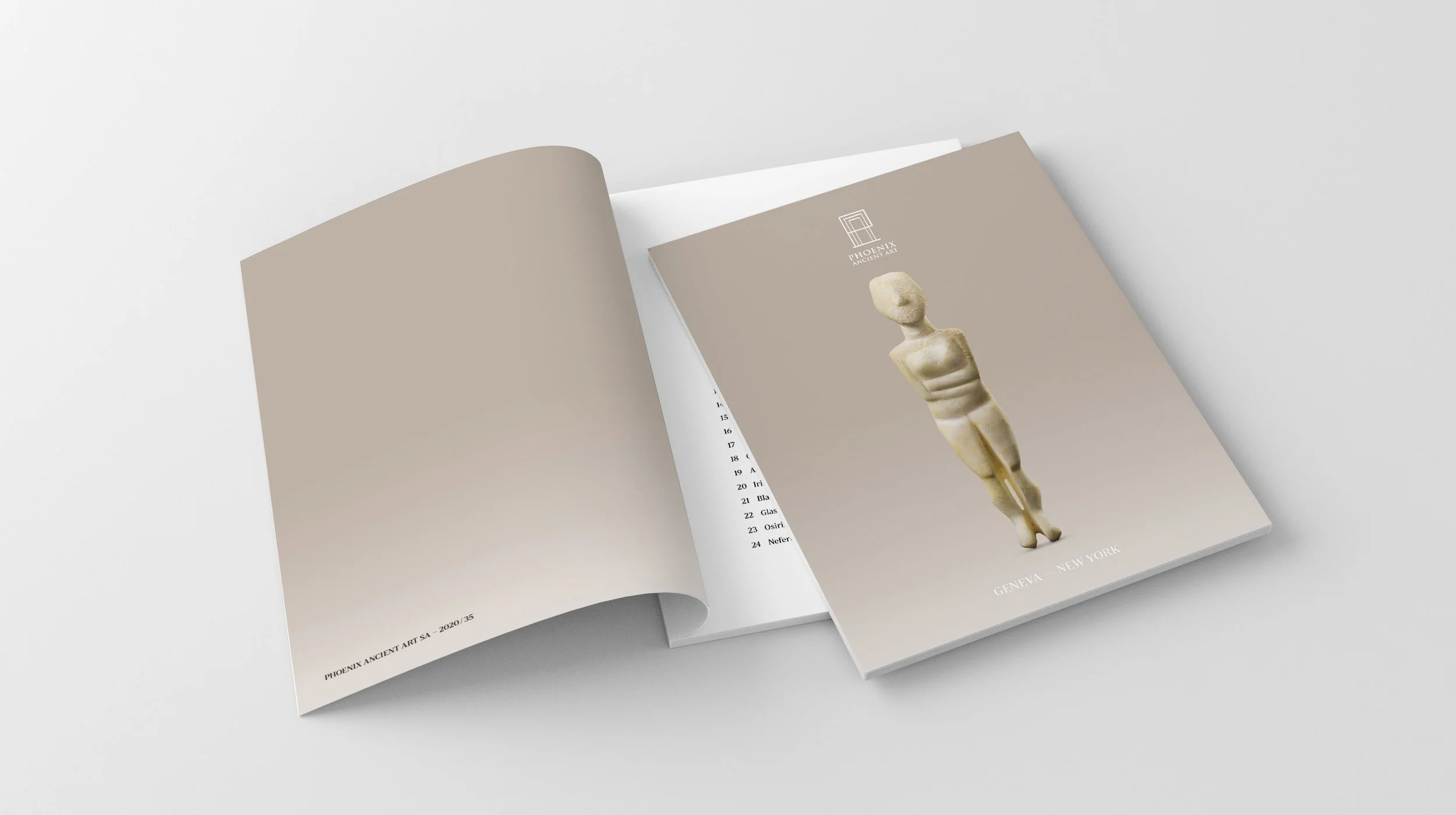
Phoenix Ancient Art publishes glossy catalogs, and produces curated exhibitions of their varied and extensive collections. The brothers Aboutaam have made every effort to broaden their client base, including speaking out in favor of regulation and courting the press.

Hicham Aboutaam describes to what extent antiquities deals have changed from they way they used to be done:

“We just sold a $150,000 piece over the web,” Hicham says. “We never met. The buyer just wired the money, and we sent the piece. That’s it.”

May 6

In a move which will change the way antiquities are traded, Phoenix Ancient Art has launched its unique e-commerce site, www.e-tiquities.com.  This easy-to-use and lovely to visit web-site is designed to make purchasing antiquities more accessible to more people. The goal is to bring the collecting of ancient art within the reach of a much broader base of potential customers.

Demystifying the purchasing process, democratizing the ownership clientele and guaranteeing satisfaction all come together at e-tiquities to make the world of collecting rare, beautiful and history-laden art reachable to anyone with an interest and internet access.

As of May 1st, 2009 e-tiquities will post a large variety of antiquities for sale, some of which are available as a straightforward purchase over the internet and others which can be bid on as in an antiquities auction.

As the president of e-tiquities, Alexander Gherardi commented,

“Many people are intimidated by the thought of purchasing antiquities. They fear buying something that is inauthentic, illegally acquired or overpriced. E-tiquities.com eliminates this anxiety. Our researchers have worked to make e-tiquities an educational site as well as an accessible way to collect elegant, guaranteed authentic antiquities. It is truly an innovation in the field.”

Apr 30

Having a reputation as the “older, quieter brother” of the two Aboutaam brothers, a story is told of one of Ali’s earlier ventures into acquisition of antiquities.

“I remember there was an auction in London, “explains Ali. “I was 25 years old, wearing a jean jacket, and it was an auction of really tiny things. I was trying to buy the whole thing- everything.”

Outbidding even his most motivated competition, Ali continued to bid until he paid  £14,000 for a piece which was listed at £200-£400; about 70 times more than Christie’s estimated value.

Laughing, Ali described the auctioneer as making comments like, “This is a record!”

When the auction was over, Ali sent a friend who was working for the Aboutaams to collect the pieces they had purchased for a total of £400,000. “Everything could fit in his hand!” Ali exclaims.

What seemed to some as reckless purchases at the time turned out to be excellent business sense later, when much of what Ali had purchased at auction that day has since sold for double, and even triple what was originally paid.

Some of the finest miniature pieces that were purchased that day at Christie’s are still in the brothers’ collection.

Apr 23

Ancient art is of twofold significance, as implied by the name. When an object is ancient its importance comes from the mere fact that it is an example of something that either no longer exists, or as something that teaches us about the culture or civilization it comes from. This is true even of objects that might not have any “artistic” value as such, like ancient tools.

But when an object is not only ancient, but is considered an art object, either when it was created, such as a sculpture or paintings and illustrations or in the present, such as with coins or pottery, the object takes on a significance much more impressive than the mere fact that the object is old.

Ali Aboutaam and Hicham Aboutaam of the Phoenix Ancient Art Gallery understand the special significance of ancient art. They have earned international recognition as dealers with expertise and impeccable judgment when it comes to finding and acquiring artwork that is rare, beautiful and valuable.

« Previous Entries